Understanding HOA Roof Replacement Requirements and Responsibilities
February 16, 2026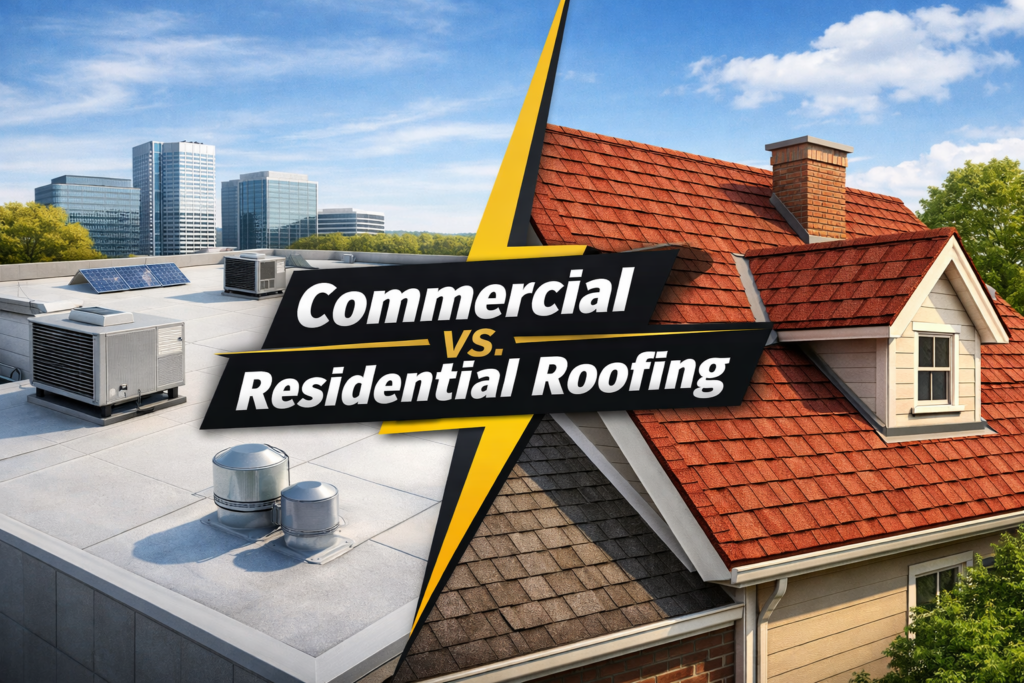
A roof plays a vital role in every building. It protects the structure from weather, improves energy efficiency, and supports long-term durability. However, commercial roofing and residential roofing are not the same. Each system follows different design rules, uses different materials, and requires a unique maintenance approach. In addition, HOA re-roofing projects require careful planning to address shared structures, approval processes, and long-term community needs. Because of these differences, choosing the right roofing solution is essential.
This guide explains the key differences between commercial and residential roofing while sharing best practices to help property owners make informed decisions.
Understanding Commercial Roofing
Commercial roofing is designed for large buildings such as offices, warehouses, hospitals, shopping centers, and condominium complexes. These structures demand roofing systems that cover wide areas and support mechanical equipment.
Commercial Roof Design
Most commercial buildings use flat or low-slope roofs. This design allows space for HVAC systems, vents, solar units, and drainage equipment. In addition, flat roofs make inspections and repairs easier for maintenance teams.
However, flat roofs require efficient drainage. Without proper water flow, standing water can weaken the roof and cause leaks over time. Therefore, professional design and installation are critical.
Commercial Roofing Materials
Commercial roofing materials focus on strength, flexibility, and weather resistance. Common options include:
-
TPO roofing for energy efficiency
-
EPDM rubber roofing for temperature flexibility
-
Built-up roofing for durability
-
Modified bitumen for waterproof protection
Because commercial roofs face constant exposure, these materials are designed to expand and contract without cracking.
Commercial Roof Maintenance
Commercial roofs need regular inspections, usually twice a year. As a result, small problems like membrane damage or blocked drains can be fixed early. This proactive approach helps avoid expensive repairs and business interruptions.
Understanding Residential Roofing
Residential roofing protects homes, townhouses, and small residential buildings. Unlike commercial roofs, these systems focus on appearance, comfort, and water drainage.
Residential Roof Design
Most homes have steep or sloped roofs. This design helps rainwater and debris flow into gutters more easily. Additionally, sloped roofs create attic space, which improves insulation and ventilation.
Because homeowners often care about curb appeal, residential roofs also match architectural style and neighborhood standards.
Residential Roofing Materials
Residential roofing materials are lighter and easier to install. Popular choices include:
-
Asphalt shingles for affordability
-
Metal roofing for strength and energy savings
-
Tile roofing for long lifespan
-
Wood shingles for natural appearance
In coastal regions, metal roofing is especially popular. For example, working with experienced metal roof specialists in tampa ensures proper installation that can withstand high winds and salt exposure.
Residential Roof Maintenance
Residential roofs usually need less maintenance. Homeowners should schedule inspections once or twice a year and after major storms. By addressing minor damage early, homeowners can extend roof life and reduce repair costs.
Key Differences Between Commercial and Residential Roofing
1. Size and Structure
Commercial roofs cover large areas and include drainage systems and mechanical units. In contrast, residential roofs are smaller and structurally simpler.
2. Installation Process
Commercial roofing projects often take weeks and require skilled crews and safety planning. Residential roof installations, however, usually take only a few days.
3. Cost Considerations
Commercial roofing costs more due to labor, materials, and design complexity. Residential roofing, on the other hand, offers more budget-friendly options.
4. Foot Traffic
Commercial roofs support frequent foot traffic for maintenance. Residential roofs are not designed for regular walking and can suffer damage if misused.
Best Practices for Commercial Roofing
To improve performance and lifespan, commercial property owners should:
-
Schedule inspections twice a year
-
Maintain proper drainage systems
-
Use energy-efficient roofing materials
-
Repair small issues immediately
-
Hire experienced commercial roofing professionals
Best Practices for Residential Roofing
Homeowners can protect their roofs by following these steps:
-
Inspect the roof after storms
-
Replace damaged shingles quickly
-
Clean gutters regularly
-
Choose materials suited for local weather
-
Work with licensed roofing contractors
Choosing the Right Roofing Contractor
Selecting the right contractor is just as important as selecting the right material. A skilled contractor understands local building codes, climate challenges, and installation standards. Therefore, professional guidance ensures safety, durability, and long-term value.
Final Thoughts
Although commercial and residential roofs serve the same purpose, their design, materials, and maintenance needs differ greatly. By understanding these differences and following best practices, property owners can protect their investment more effectively.
For reliable roofing solutions built to handle Florida’s demanding climate, Ameristar Contracting provides expert commercial and residential roofing services backed by quality workmanship and proven experience.